Mental health is just as important as physical health, yet it can be one of the most difficult topics for families to discuss. Children experience a wide range of emotions as they grow, including happiness, excitement, fear, sadness, frustration, and anxiety. Helping them understand these feelings from an early age can build emotional resilience and encourage healthy communication throughout their lives.
Many parents worry about saying the wrong thing or believe their children are too young to talk about mental health. In reality, age-appropriate conversations can help children express their emotions, develop coping skills, and feel supported when facing challenges.
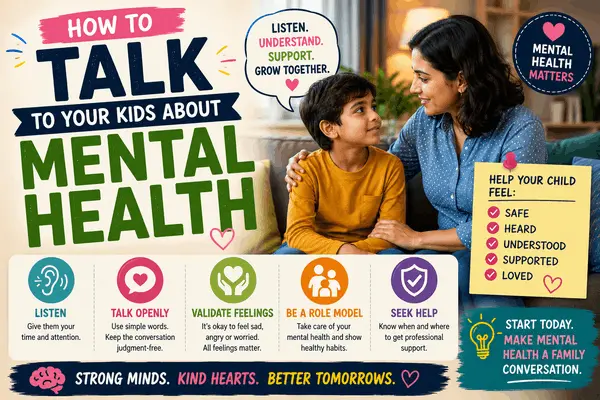
In this article, we’ll explore practical ways to talk to your kids about mental health and create a home where emotional well-being is valued and understood.
Why Talking About Mental Health Matters
Children often experience stress related to school, friendships, family changes, academic expectations, social media, or everyday life. If they don’t feel comfortable discussing their emotions, they may struggle silently or find unhealthy ways to cope.
Open conversations about mental health can help children:
- Recognise and understand their emotions.
- Build confidence in expressing their feelings.
- Develop healthy coping strategies.
- Strengthen trust with parents.
- Reduce fear or shame about emotional struggles.
- Know when and how to ask for help.
Making mental health a normal topic of conversation encourages children to see emotional well-being as an important part of overall health.
Start Conversations Early
You don’t need to wait until your child faces a major challenge to discuss emotions.
Young children can begin learning simple emotional words such as:
- Happy
- Sad
- Angry
- Excited
- Worried
- Frustrated
- Scared
As children grow older, you can introduce more complex ideas like stress, confidence, resilience, and self-care.
Regular conversations help children become comfortable talking about their feelings.
Create a Safe and Supportive Environment
Children are more likely to open up when they feel safe, respected, and accepted.
Encourage conversations by:
- Listening without interrupting.
- Staying calm when they share difficult emotions.
- Avoiding criticism or punishment for expressing feelings.
- Giving them your full attention.
A supportive environment teaches children that all emotions are acceptable, even if certain behaviours still require guidance.
Listen More Than You Speak
When children share their thoughts, resist the urge to immediately solve every problem.
Instead:
- Listen carefully.
- Ask open-ended questions.
- Allow pauses in the conversation.
- Let them explain in their own words.
Questions like these can encourage discussion:
- “How did that make you feel?”
- “What do you think caused that?”
- “What would help you feel better?”
- “Would you like to talk more about it?”
Feeling heard is often more valuable than receiving instant advice.
Help Children Name Their Emotions
Young children may struggle to explain what they’re feeling.
Instead of saying:
“Don’t cry.”
Try saying:
“It seems like you’re feeling disappointed because your plans changed.”
Helping children identify emotions improves emotional awareness and makes it easier for them to communicate in the future.
Normalise Every Emotion
Children should understand that all emotions are natural.
Explain that everyone experiences:
The important lesson is not to avoid emotions but to learn healthy ways to manage them.
Share Your Own Feelings Appropriately
Children learn emotional skills by watching adults.
You can model healthy communication by saying things like:
- “I felt stressed today, so I took a short walk.”
- “I was disappointed, but talking about it helped.”
- “I’m feeling tired today, so I’m going to rest.”
Sharing simple examples teaches children that it’s normal to experience difficult emotions and healthy to cope with them constructively.
Encourage Healthy Coping Strategies
Teach children positive ways to manage stress and difficult emotions.
Healthy coping activities include:
- Drawing or colouring.
- Playing outside.
- Deep breathing.
- Listening to music.
- Talking to a trusted adult.
Different children respond to different strategies, so encourage them to discover what works best.
Watch for Changes in Behaviour
Children don’t always express emotional struggles with words.
Pay attention to noticeable changes such as:
- Withdrawal from family or friends.
- Changes in sleep patterns.
- Loss of interest in favourite activities.
- Frequent irritability.
- Difficulty concentrating.
- Sudden changes in school performance.
These changes don’t always indicate a mental health concern, but they may signal that your child needs additional support or conversation.
Limit Stigma Around Mental Health
Avoid describing emotional struggles as weakness or something to be ashamed of.
Instead, explain that:
- Mental health is part of overall health.
- Everyone faces emotional challenges at times.
- Asking for help shows strength, not weakness.
- Talking about feelings is healthy.
Reducing stigma encourages children to seek support when they need it.
Build Strong Daily Connections
Small daily conversations often make serious discussions easier later.
Try spending quality time together by:
- Eating meals as a family.
- Reading together.
- Going for walks.
- Playing games.
- Talking before bedtime.
These regular moments strengthen trust and make children more comfortable sharing their emotions.
Know When Professional Help May Be Needed
Most children experience occasional emotional ups and downs as part of normal development. However, if intense feelings persist, interfere with daily life, or significantly affect school, relationships, or everyday activities, it may be helpful to consult a qualified mental health professional.
Seeking support early can provide children and families with helpful strategies and reassurance. Asking for professional guidance is a positive step toward supporting your child’s well-being.
Sample Daily Emotional Check-In
A simple five-minute conversation each evening can encourage open communication.
You might ask:
- What was the best part of your day?
- Was anything difficult today?
- How did you feel about it?
- Is there anything you’d like help with tomorrow?
These questions create a routine where discussing emotions becomes natural rather than unusual.
Final Thoughts
Talking to your kids about mental health doesn’t require perfect words or expert knowledge. What matters most is creating an environment where children feel safe, listened to, and supported. By encouraging open conversations, helping them understand their emotions, modelling healthy coping strategies, and showing empathy, you can build the foundation for lifelong emotional well-being.
Remember, every conversation—whether it’s about a joyful moment or a difficult feeling—is an opportunity to strengthen your relationship with your child. When children know they can talk openly without fear of judgment, they develop greater confidence, resilience, and the ability to navigate life’s challenges in healthy ways.
Frequently Asked Questions (FAQs)
1. At what age should I start talking to my child about mental health?
You can begin in early childhood by helping children identify simple emotions such as happiness, sadness, anger, and fear. As they grow, conversations can become more detailed and age-appropriate.
2. How can I encourage my child to talk about their feelings?
Create a safe and supportive environment, ask open-ended questions, listen without judgment, and make emotional conversations a regular part of daily life.
3. What are healthy ways for children to cope with stress?
Activities such as drawing, reading, outdoor play, deep breathing, music, journaling, talking to trusted adults, and regular physical activity can help children manage stress in healthy ways.
4. What signs might suggest my child needs extra emotional support?
Persistent changes in mood, sleep, behaviour, school performance, social interactions, or interest in usual activities may indicate that your child would benefit from additional support or a conversation with a qualified professional.
5. Why is it important to reduce the stigma around mental health?
When children understand that emotional well-being is a normal part of overall health, they are more likely to express their feelings openly, seek help when needed, and develop healthy coping skills throughout life.