The words coin and token are often used interchangeably in cryptocurrency discussions, but technically they describe different types of digital assets. The easiest way to understand the difference is to look at where the asset operates.
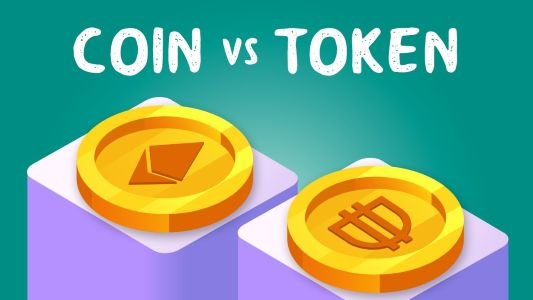
A crypto coin is generally the native asset of its own blockchain, while a crypto token is created and operates through an existing blockchain or protocol.
Bitcoin (BTC), Ether (ETH) and Solana (SOL) are examples of native coins because they belong to their respective blockchain networks. Many stablecoins, governance assets and other digital assets, on the other hand, are issued as tokens using existing blockchain infrastructure.
Understanding this distinction can help beginners evaluate transaction fees, wallet compatibility, network security and the actual purpose of a crypto asset before buying or transferring it.
What Is a Crypto Coin?
A crypto coin is the native digital asset associated with a blockchain network.
For example:
- BTC is native to the Bitcoin network.
- ETH is native to Ethereum.
- SOL is native to Solana.
- ADA is native to Cardano.
These assets are deeply connected to how their underlying networks operate.
Depending on the blockchain, the native coin may be used to:
- Pay transaction fees
- Transfer value
- Reward miners
- Participate in staking
- Reward validators
- Help secure the network
A blockchain can technically support many different digital assets, but it normally has a particular native asset used at the protocol level.
What Is a Crypto Token?
A crypto token is generally a digital asset created using an existing blockchain’s infrastructure rather than operating through its own independent blockchain.
Ethereum provides one of the best-known examples.
Developers can deploy smart contracts on Ethereum to create tokens without building an entirely new blockchain from the beginning.
Many Ethereum-based fungible tokens use the ERC-20 token standard.
Tokens can represent many different things, including:
- Stablecoins
- Governance rights
- Utility within applications
- Tokenized assets
- Gaming assets
- Voting rights
- Digital ownership
The blockchain provides the underlying infrastructure, while the token’s smart contract defines important rules governing the asset.
Coins vs Tokens: What Is the Main Difference?
The main distinction is their relationship with the blockchain.
Coin: Native to the blockchain.
Token: Built or issued using an existing blockchain or protocol.
Consider Ethereum.
ETH is the native asset of Ethereum, so it is generally described as a coin.
An ERC-20 asset created through a smart contract on Ethereum is a token.
Both may appear next to each other inside the same wallet, but they have different relationships with the underlying network.
Is Bitcoin a Coin or Token?
Bitcoin is a coin.
BTC is the native asset of the Bitcoin network and operates according to Bitcoin’s protocol rules.
It is not an ERC-20 token or a token created on another blockchain.
Bitcoin is used within its own network for transferring digital value, and new BTC is issued through the network’s mining process according to its monetary rules.
This makes BTC one of the clearest examples of a cryptocurrency coin.
Is Ethereum a Coin or Token?
Ether (ETH) is a coin because it is the native asset of the Ethereum blockchain.
ETH plays several important roles.
It is used to:
- Pay Ethereum gas fees
- Transfer value
- Participate in staking
- Support network security
- Interact economically with Ethereum applications
Ethereum can also host thousands of tokens created using smart contracts.
Therefore, ETH itself is a coin, while many other assets operating through Ethereum are tokens.
Are Stablecoins Coins or Tokens?
Many major stablecoins are tokens rather than independent native blockchain coins.
For example, a stablecoin may be issued on networks such as Ethereum, Solana or other supported blockchains.
This creates an important practical consideration.
The “same” stablecoin can potentially exist on multiple networks.
When withdrawing or transferring it, users need to select the correct blockchain network.
The asset name alone is not enough.
Before making a stablecoin transfer, verify:
- Token
- Blockchain network
- Receiving address
- Exchange support
- Deposit network
- Withdrawal network
Sending a token through an unsupported network can prevent the receiving platform from automatically crediting the deposit.
Can One Token Exist on Multiple Blockchains?
Yes.
Some digital assets are issued or represented across multiple blockchain networks.
A token might have versions on:
- Ethereum
- Solana
- BNB Chain
- Other compatible networks
This is one reason beginners need to understand the difference between an asset and the network carrying that asset.
Suppose an exchange supports deposits of a particular stablecoin only through Ethereum.
Sending a version of that asset through another blockchain may not result in the deposit being credited normally.
Always verify network compatibility before transferring funds.
Do Tokens Need Coins to Pay Transaction Fees?
Usually, blockchain transaction fees are paid using the network’s native asset, although user experience can vary depending on the blockchain and application.
For example, when transferring an ERC-20 token directly on Ethereum, the transaction normally requires ETH for gas.
Imagine your wallet contains an Ethereum-based token but no ETH.
You may own the token but be unable to transfer it until enough ETH is available to cover the required network fee.
This can surprise beginners.
The token being transferred and the asset used to pay the blockchain fee are not necessarily the same.
How Are Crypto Coins Created?
The process depends on the blockchain’s consensus and issuance rules.
Bitcoin creates new BTC through mining rewards.
Proof-of-Stake networks may issue native assets through mechanisms connected with validator participation.
Creating an entirely new blockchain coin is technically complex because developers may need to design and maintain:
- Consensus rules
- Node software
- Network security
- Block production
- Economic incentives
- Wallet infrastructure
- Network upgrades
Launching a token on an existing programmable blockchain can be significantly easier because the underlying network infrastructure already exists.
How Are Crypto Tokens Created?
On smart-contract platforms, developers can create tokens by deploying smart contracts that follow particular standards.
The contract may define features such as:
- Token name
- Symbol
- Supply
- Transfer rules
- Minting permissions
- Burning mechanisms
- Governance functionality
This lower technical barrier has helped create enormous numbers of crypto tokens.
However, easy token creation has an obvious downside.
Anyone being able to create a token does not mean every token has genuine value.
Some may have legitimate applications, while others may be highly speculative, poorly designed or fraudulent.
Are Coins Safer Than Tokens?
Not automatically.
Being a coin does not guarantee quality.
A small cryptocurrency can operate its own blockchain and still suffer from:
- Weak security
- Low liquidity
- Limited adoption
- Poor development
- Concentrated ownership
- Network attacks
Likewise, a token operating on an established blockchain can have significant adoption and liquidity.
However, tokens can introduce additional dependencies.
A token’s security may depend on:
- The underlying blockchain
- Its smart contract
- Administrative permissions
- Issuer security
- Bridges or other infrastructure
Investors should therefore evaluate the individual asset rather than assuming all coins are safer than all tokens.
Are Tokens Easier to Create Than Coins?
Generally, yes.
Creating a token on an established smart-contract blockchain can be considerably easier than developing an independent blockchain.
This is one reason the crypto market contains so many tokens.
A developer does not necessarily need to create a new validator or miner network. The existing blockchain provides the underlying infrastructure for processing transactions.
However, launching a token is very different from creating a successful crypto project.
A sustainable project still needs areas such as:
- Security
- Useful functionality
- Liquidity
- Users
- Development
- Sustainable economics
The technical ability to create a token does not create market value automatically.
Why Does the Coin vs Token Difference Matter to Investors?
Understanding the distinction can reveal where an asset’s value and risks come from.
For a native coin, investors may examine:
- Blockchain security
- Validator or miner economics
- Network adoption
- Supply policy
- Transaction demand
For a token, additional questions may include:
- Which blockchain hosts it?
- What does the token actually do?
- Who controls the smart contract?
- Can additional tokens be minted?
- Can transfers be paused?
- How concentrated is ownership?
- Does the token depend heavily on one company?
These questions can uncover risks that are not obvious from price charts alone.
Coin Price and Token Price Do Not Show Investment Quality
Whether something is a coin or token tells you about its technical structure, not whether it is a good investment.
A ₹1 token is not automatically cheaper than a ₹50,000 coin.
Investors also need to consider:
Market capitalization = Price × Circulating supply
An asset can have an extremely low unit price because billions or trillions of units exist.
Similarly, a coin with a high price per unit can have a smaller overall valuation if its supply is limited.
This is why comparing cryptocurrencies solely by individual coin or token price can be misleading.
Coins and Tokens Can Both Have Real Utility
Both categories can serve useful purposes.
Native coins can be essential for securing and operating blockchain networks.
Tokens can provide functionality within applications built on those networks.
The more useful distinction for an investor is therefore not simply:
Coin = good, Token = bad
Instead, ask:
What does this asset do, why does someone need it, and what creates sustainable demand for it?
A technically well-designed token with meaningful usage may have a stronger reason to exist than an independent coin with almost no users.
FAQs
Q1. What is the easiest way to understand coins and tokens?
A: A coin is generally the native asset of its own blockchain, such as BTC on Bitcoin or ETH on Ethereum. A token is typically created using an existing blockchain, such as an ERC-20 token operating on Ethereum.
Q2. Is ETH a coin or a token?
A: ETH is the native coin of the Ethereum blockchain. Ethereum also hosts many separate tokens created through smart contracts.
Q3. Is a stablecoin a coin or token?
A: Many widely used stablecoins are issued as tokens on existing blockchain networks. Some are available across multiple networks, so users should always verify the correct blockchain before making a transfer.
Q4. Are crypto coins better investments than tokens?
A: Not necessarily. Whether an asset is a coin or token does not determine its investment quality. Investors should examine utility, adoption, liquidity, security, token economics, development and the sustainability of demand.