City driving rewards a very different kind of car from highway touring. Your average journey may involve squeezing through a narrow residential lane, crawling through bumper-to-bumper traffic, making a U-turn under a flyover and finally trying to fit into a parking space with a scooter on one side and a pillar on the other.
In that environment, a small hatchback can be extremely difficult to beat. But Indian cities also bring potholes, tall speed breakers, damaged monsoon roads and steep parking ramps—the situations where an SUV or compact SUV starts making a strong case for itself.
So, SUV vs hatchback for city driving is really a choice between compact convenience and added versatility. Here’s how they compare in the conditions Indian drivers encounter every day.
Hatchbacks Have a Clear Advantage in Tight Spaces
Size is one of the biggest benefits of a hatchback.
The current Maruti Suzuki Swift measures only 3,860 mm long, while the Hyundai Grand i10 NIOS is even shorter at 3,815 mm.
That compact footprint becomes useful when:
- Driving through narrow market roads
- Making tight U-turns
- Negotiating crowded residential lanes
- Entering small parking spaces
- Driving through heavy traffic
- Parking along the roadside
Autocar India similarly identifies easy manoeuvrability and parking as major hatchback advantages because of their shorter dimensions and generally tight turning ability.
For someone spending almost all their time in a congested city, this everyday convenience matters more than having a vehicle that simply looks larger.
SUVs Give You More Confidence Over Bad Roads
The hatchback starts losing its advantage when road quality deteriorates.
Higher ground clearance is one of the strongest reasons Indian buyers have moved towards SUVs and crossovers.
Large potholes, badly constructed speed breakers, unfinished roads and steep basement ramps can all make a low car more difficult to use.
An SUV’s additional clearance reduces the likelihood of scraping the underbody.
This does not mean every city buyer needs 200 mm or more of ground clearance. If your regular roads are reasonably maintained, a hatchback can manage perfectly well.
But if the last few kilometres of your daily commute include badly broken surfaces, the extra clearance of an SUV can be genuinely useful rather than merely cosmetic.
Which Is Easier to Park?
The hatchback usually wins.
Consider the Swift. Its official specifications list a 4.8-metre turning radius along with its 3,860 mm overall length.
That combination is useful when performing three-point turns, entering tight parking spaces or manoeuvring through congested streets.
Compact SUVs have become increasingly city-friendly, but they tend to be wider and taller. The current Brezza, for example, measures 3,995 mm long and 1,790 mm wide.
The difference may not look enormous on paper, but an additional 100 mm of width can become very noticeable when parking beside another vehicle or navigating an extremely narrow lane.
SUVs partly compensate through technology. Depending on the model and variant, buyers can now get:
- Rear parking cameras
- Front and rear parking sensors
- 360-degree cameras
- Blind-view cameras
- Automatic parking assistance
These features make larger vehicles much easier to manage, but they do not physically make the vehicle smaller.
SUVs Provide a Better View of Traffic
A higher driving position is one of the most immediately noticeable differences when moving from a hatchback to an SUV.
The driver sits higher and can often see farther ahead through traffic. This can make it easier to anticipate slowing vehicles and understand what is happening beyond the car directly in front.
The elevated seating position can also make some drivers feel more confident.
However, there is a trade-off.
A taller bonnet can make it harder to judge objects immediately in front of a large SUV. Small children, animals, kerbs and low obstacles can disappear from direct view.
Front parking sensors and a 360-degree camera are therefore particularly useful on larger SUVs.
Hatchbacks Are Usually Cheaper to Buy
If the vehicle is primarily for commuting, a hatchback can leave a substantial amount of money in your pocket.
For example, the Hyundai Grand i10 NIOS currently starts at about ₹5.60 lakh ex-showroom, positioning it as an affordable everyday city car.
Moving to a conventional compact or midsize SUV generally means spending considerably more.
The additional money may buy more than SUV styling—it can provide a larger cabin, stronger engine, higher ground clearance and additional equipment—but you should ask whether those benefits are actually necessary for your usage.
If one or two people use the car primarily for a 15 km office commute, spending several lakh rupees extra simply for a taller body may not provide proportional value.
Hatchbacks Can Be More Fuel-Efficient
Weight and aerodynamics matter.
Hatchbacks are generally smaller and lighter than SUVs, which can help fuel economy, particularly when similar engine technologies are compared.
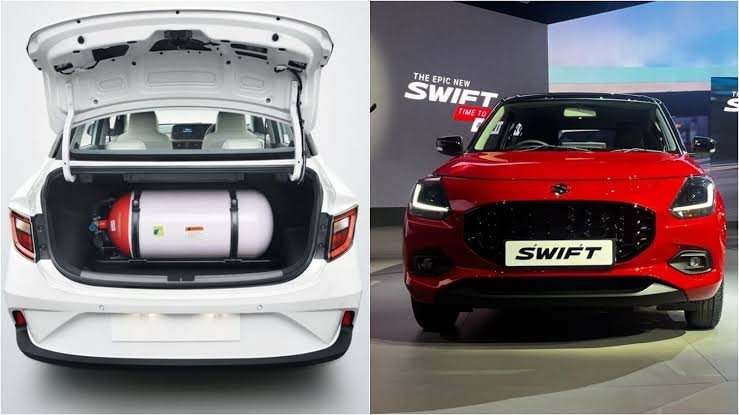
The current Swift petrol, for example, has an official claimed fuel efficiency of 24.80 km/l, while the CNG version is rated at 32.85 km/kg.
SUV fuel economy varies dramatically depending on engine, transmission and hybrid technology. A strong-hybrid SUV can actually be exceptionally efficient in city traffic, so body type alone cannot determine mileage.
But when comparing straightforward petrol hatchbacks against larger conventional petrol SUVs, the smaller vehicle often has an efficiency advantage.
That difference becomes meaningful if you drive 1,000–1,500 km every month.
Which Is More Comfortable in Traffic?
It depends on what kind of comfort you mean.
A hatchback can be physically easier to operate because of its small dimensions, light controls and easy manoeuvrability. Hyundai, for instance, specifically positions the Grand i10 NIOS as suitable for everyday urban mobility, and its compact 3,815 mm length supports that role.
An SUV can feel more comfortable in another way. You sit higher, entry and exit can be easier, and you may not have to slow as dramatically for every rough patch of road.
Transmission choice matters even more in heavy traffic.
Whether you buy an SUV or hatchback, consider an automatic if most of your driving involves congestion.
Common options include:
- AMT: Affordable and efficient, though gear changes can sometimes be noticeable.
- CVT/IVT: Usually smooth and well suited to city traffic.
- Torque converter: Generally smooth at crawling speeds and available in several SUVs.
- DCT: Quick shifting and enjoyable with powerful engines, although characteristics vary significantly by manufacturer and calibration.
For daily bumper-to-bumper traffic, a small automatic hatchback can be one of the easiest cars to live with.
What About Cabin Space?
This comparison is less straightforward than it appears.
A small hatchback obviously cannot provide the same overall space as a much larger midsize SUV. But compact dimensions do not necessarily mean an unusable interior.
The Grand i10 NIOS, for example, fits a 2,450 mm wheelbase into a 3,815 mm-long body.
For a couple or a small family, modern hatchbacks can provide perfectly adequate space.
An SUV becomes more attractive when:
- Three adults regularly use the rear seat
- You carry significant luggage
- Your family includes tall passengers
- You frequently take weekend road trips
- You need greater overall cabin flexibility
Do not buy based purely on exterior size. Sit in the rear seat of both vehicles with the front seat adjusted to your normal driving position.
SUVs Can Be Easier for Elderly Passengers
This is an often-overlooked advantage.
A low seating position requires passengers to lower themselves farther into the car. An SUV’s more elevated seat can make entry and exit easier for some elderly passengers.
But extremely tall SUVs can create the opposite problem because passengers have to climb upward.
Compact crossovers and smaller SUVs often provide a useful middle ground.
For a family car, take your parents to the showroom and let them enter and exit the vehicle themselves. That five-minute test can be more informative than hours spent comparing specifications online.
Which Is Better During the Monsoon?
An SUV’s higher ground clearance can provide additional confidence over potholes hidden by shallow standing water and damaged road surfaces.
But this advantage should not encourage anyone to drive through deep floodwater.
Ground clearance and water-wading depth are completely different measurements. A city SUV is not automatically designed to cross flooded roads.
Deep water can damage the engine, electronics, transmission and other components. If you cannot judge the depth safely, avoid entering the flooded section regardless of whether you drive a hatchback or SUV.
Is an SUV Safer Than a Hatchback?
Not automatically.
Vehicle size can influence crash behaviour, but body style alone is not enough to determine whether a particular car is safe.
When comparing two vehicles, check their actual safety credentials and equipment:
- Independent crash-test results
- Electronic Stability Control
- Airbags
- ABS with EBD
- Three-point seat belts
- ISOFIX child-seat mounts
- Tyre Pressure Monitoring System
- Braking performance
- ADAS where available
Even within the hatchback category, equipment is improving. For example, current Grand i10 NIOS variants include six airbags, with Hyundai listing six airbags among its standard safety equipment.
Buy the safer specific model and variant, rather than assuming every SUV is safer simply because it is taller.
SUV vs Hatchback: What Should a City Buyer Choose?
For pure city driving, the hatchback has a strong practical advantage.
It is compact, easy to park, easy to manoeuvre through congested streets and generally cheaper to purchase. Running costs can also be lower, making it particularly sensible for office commuters, first-time buyers and small families.
An SUV becomes the stronger option when city driving includes poor roads or when you need more ground clearance, a higher seating position and additional cabin flexibility.
A useful way to decide is:
Choose a hatchback if most of your driving is in congested areas, parking is limited, your roads are reasonably good and keeping purchase and running costs low is important.
Choose an SUV if your city has badly broken roads, you frequently encounter large speed breakers, you prefer a higher driving position or your family needs additional space and easier entry.
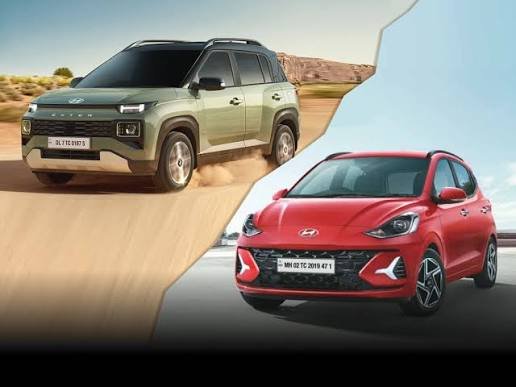
There is also a third option: the micro-SUV or crossover. Cars in this category attempt to combine a hatchback-like footprint with higher ground clearance and SUV-inspired seating. Hyundai itself positions the Grand i10 NIOS as the small-family city choice while suggesting the higher-clearance Exter for buyers needing additional versatility.
For many Indian city buyers, that middle ground may be more useful than automatically choosing the largest SUV their budget allows.
FAQs
Q1. Is a hatchback better than an SUV for daily office commuting?
A. If your commute is mainly through congested city roads with limited parking, a hatchback is usually easier to live with. Its smaller dimensions, potentially better fuel economy and lower purchase cost make it particularly suitable for everyday commuting.
Q2. Which is better for potholes: SUV or hatchback?
A. An SUV generally has an advantage because of its higher ground clearance. However, suspension tuning and tyre size also matter. A well-engineered hatchback can still handle normal potholes and speed breakers comfortably.
Q3. Should a first-time car buyer choose an SUV or hatchback?
A. A hatchback is often an excellent first car because its compact dimensions make parking and manoeuvring easier. A small SUV is worth considering if your local roads are poor or your family needs the higher seating position and extra ground clearance.
Q4. Is a compact SUV worth paying extra for city driving?
A. It can be if you genuinely benefit from higher ground clearance, easier entry, a higher driving position or additional space. If your roads are good and the car is used mainly by one or two people for commuting, a good automatic hatchback may provide better overall value.