A seven-seat badge does not necessarily mean seven people will travel comfortably. This becomes obvious on a family trip when grandparents occupy the second row, children climb into the third row, several suitcases need space and everyone expects enough legroom for a five-hour journey.
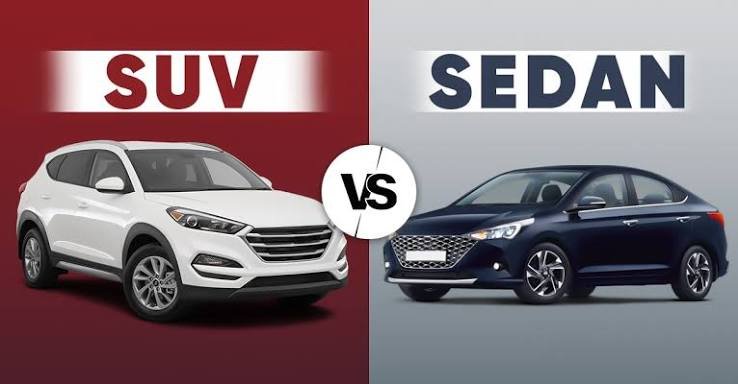
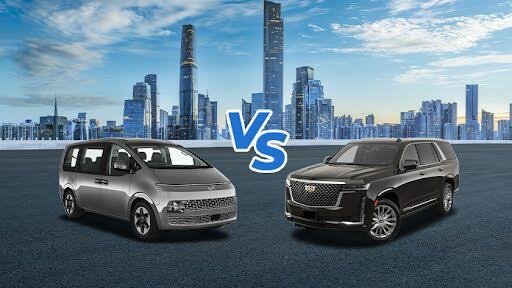
This is where the difference between an SUV and an MPV becomes important. SUVs generally prioritise road presence, ground clearance, performance and versatility, while MPVs are designed more deliberately around passengers, seating flexibility and cabin space.
For an Indian family, neither is automatically better. The right choice depends mainly on how many people actually travel together, the roads you use and whether passenger comfort or SUV capability receives greater priority.
MPVs Are Usually Better at Carrying Six or Seven People
If your family regularly travels with six or seven occupants, an MPV normally has the advantage.
The reason is packaging. MPVs are designed to maximise usable interior space rather than create an aggressive SUV shape.
This difference becomes particularly noticeable in the third row.
For example, when comparing the Toyota Innova Hycross with Mahindra’s three-row SUV alternatives, current evaluations continue to favour the Hycross for genuine third-row usability. Autocar notes that the Hycross provides considerably better third-row comfort and luggage space when all rows are occupied.
A proper family MPV can therefore make sense when the third row is used by adults rather than only children.
SUVs Usually Have Better Ground Clearance
Indian families do not always travel on smooth highways.
A holiday may involve a broken approach road to a resort, village roads, large speed breakers, steep ramps or poorly maintained surfaces.
This is where SUVs become attractive.
Their higher ride height and generally greater ground clearance provide additional confidence over difficult surfaces. Depending on the model, SUVs may also offer:
- Larger wheels
- Longer suspension travel
- More robust underbody protection
- All-wheel-drive or four-wheel-drive systems
- Drive modes
- Better approach and departure angles
But SUV styling should not be confused with off-road capability. Most front-wheel-drive urban SUVs are still primarily road vehicles.
If your family travels mainly between cities on paved roads, an MPV’s lower off-road capability may not matter at all.
MPVs Have More Flexible Second-Row Seating
Seat adjustment is one of the biggest differences that specification sheets often fail to communicate properly.
A good family MPV allows passengers to redistribute cabin space.
The Kia Carens Clavis, for example, provides second-row seats that can slide, recline and tumble, while the third row has a 50:50 split with reclining and full-flat-folding capability.
Sliding the second row forward slightly can create extra knee room for third-row passengers. Slide it backwards when the third row is empty, and second-row passengers receive more space.
Some three-row SUVs have much less flexibility. Current comparisons of the Mahindra XUV 7XO, for example, point out that its middle row does not slide fore and aft, limiting the ability to redistribute passenger space between the second and third rows.
For a family vehicle, this seemingly small difference can become important on every long journey.
SUVs Can Be More Enjoyable for the Driver
An MPV may win for passengers, but SUVs frequently have stronger appeal from behind the steering wheel.
Many modern SUVs offer powerful turbo-petrol or diesel engines and are designed to provide a more engaging driving experience.
This becomes particularly noticeable during:
- Highway overtaking
- Hill driving
- Driving with a full passenger load
- Fast expressway cruising
- Rough-road travel
Current comparisons between the XUV 7XO and Innova Hycross demonstrate the trade-off clearly: the Mahindra provides stronger performance and a more engaging driving experience, while the Toyota remains the stronger choice for passenger space and long-distance family comfort.
If the person buying the car is also an enthusiastic driver, this distinction matters.
Which Has the Better Third Row?
For families, this may be the most important question in the entire comparison.
Do not evaluate a seven-seater by simply sitting in the driver’s seat.
Climb into the third row yourself.
Check:
- Knee room
- Headroom
- Thigh support
- Foot space
- Seatback angle
- AC vents
- USB charging
- Window size
- Ease of entry
- Whether the second row slides
The Toyota Innova Hycross provides a useful benchmark. Its second row can move substantially forward to improve access, and its third row provides enough space for adults to remain comfortable on longer journeys.
By comparison, the third rows in several SUV alternatives are better suited to children or occasional adult use.
If the third row will only be used twice a month for short journeys, an SUV may be perfectly adequate.
If six adults regularly travel hundreds of kilometres together, a proper MPV becomes much more compelling.
What About Luggage With All Seats Up?
This is another area where families make purchasing mistakes.
A vehicle can have enormous boot capacity with its third row folded but very little usable luggage room when seven seats are occupied.
For a family holiday, you need passengers and luggage at the same time.
The Hycross performs particularly well here compared with many three-row SUVs, offering better luggage space with all seating rows in use.
Before buying any seven-seater, take your normal suitcases to the showroom if possible.
Check whether the boot can accommodate:
- Two or three large suitcases
- Cabin bags
- A child’s stroller
- Shopping bags
- Wheelchair or mobility equipment if required
A vehicle that seats seven but cannot carry their luggage may not be suitable for your family’s actual usage.
SUV vs MPV for Elderly Parents
MPVs can be particularly good for multi-generational Indian families.
Their focus on passenger movement often means large doors, flexible seats and easier access to multiple rows.
However, the ideal entry height matters more than the body style.
A very low vehicle can require elderly passengers to bend significantly, while a tall SUV may require them to climb into the cabin.
The best family vehicle has a seat positioned close to normal hip height, allowing the passenger to move in rather than climb up or drop down.
If parents or grandparents will regularly travel in the car, bring them along for the test drive.
Do not decide on their behalf based on brochure measurements.
Six-Seater or Seven-Seater?
The answer depends on how your family travels.
A six-seater with second-row captain seats provides:
- Individual armrests
- Better personal space
- Easier movement towards the third row
- More premium second-row experience
- Greater comfort on long journeys
A seven-seater with a second-row bench provides:
- One additional passenger position
- Better flexibility for larger families
- Ability to seat five people while keeping the third row folded
- Potentially greater luggage flexibility
The Carens Clavis, for example, is offered with six- and seven-seat arrangements on applicable configurations, with Kia positioning the captain-seat layout as the more premium passenger option.
For a family of four or five that occasionally carries six people, captain seats can be excellent.
For a household that frequently needs seven seats, the bench configuration is more practical.
Which Is Better in the City?
A smaller MPV can be surprisingly easy to use in cities, but large MPVs require more parking space.
SUVs vary enormously in size. A compact five-seat SUV is obviously easier to manoeuvre than a large three-row MPV, but a full-size three-row SUV may be just as demanding.
For urban family use, compare actual:
- Length
- Width
- Turning radius
- Parking-camera quality
- Front and rear sensors
- 360-degree camera availability
Do not assume an SUV is easier to park simply because its body is shorter. Width and visibility can matter just as much.
Which Is More Fuel-Efficient?
There is no universal SUV-versus-MPV winner because the powertrain makes a much bigger difference.
A large petrol SUV can consume considerable fuel in city traffic. A diesel SUV may perform much better for high-mileage highway users.
Strong-hybrid MPVs introduce another possibility.
The Toyota Innova Hycross Hybrid, for example, is repeatedly favoured over large petrol SUVs when fuel efficiency and family comfort are major requirements.
When calculating running costs, compare the exact engine and transmission combinations you intend to buy.
Do not compare an efficient hybrid MPV against a turbo-petrol SUV and conclude that all MPVs are more economical.
Is an SUV Safer Than an MPV?
A taller bonnet and rugged appearance do not automatically make a vehicle safer.
Evaluate the individual model.
Important family-safety features include:
- Strong crash-test performance
- Six or more airbags where available
- Electronic Stability Control
- Three-point seat belts
- ISOFIX child-seat mounts
- Tyre Pressure Monitoring System
- Good braking performance
- 360-degree camera
- Automatic Emergency Braking
- Blind-spot assistance
- Other useful ADAS features
For example, the current Carens Clavis lists six airbags along with a broader safety package, while higher configurations add technologies such as a 360-degree camera and Blind View Monitor.
Always compare the exact variant because safety and ADAS equipment can change substantially between trims.
SUV vs MPV: Which Should Your Family Buy?
For a family of four or five, an SUV is often the more versatile choice. You can enjoy higher ground clearance, stronger road presence and potentially more engaging performance without worrying much about third-row comfort.
For a family that regularly carries six or seven people, an MPV usually makes more sense.
The distinction becomes especially clear on long journeys. The Toyota Innova Hycross, for example, continues to outperform many three-row SUVs for adult third-row comfort, seating flexibility and luggage capacity with all seats occupied.
A practical rule is:
Choose an SUV if you usually carry four or five people, frequently encounter poor roads, value ground clearance and road presence, and use the third row only occasionally.
Choose an MPV if six or seven people travel regularly, adult third-row comfort matters, you need flexible seating and family road trips are a major part of your usage.
For many Indian households, the real decision should therefore not be “Which looks better?” but “How often will we actually use the third row?”
That answer can quickly reveal which body style fits the family better.
FAQs
Q1. Is an MPV better than an SUV for a family of seven?
A. Usually, yes, particularly when all seven seats are regularly occupied. MPVs are generally packaged to provide better third-row space and seating flexibility. A vehicle such as the Innova Hycross offers a genuinely usable third row for adults, whereas the last row in many three-row SUVs is better for occasional use.
Q2. Which is better for long family trips: SUV or MPV?
A. An MPV is generally better when passenger comfort and luggage capacity are the priorities. An SUV may be preferable when the journey includes poor roads or when stronger performance and ground clearance matter more.
Q3. Is an SUV better if I only occasionally need seven seats?
A. Yes. If your normal usage involves four or five passengers and the third row is needed only occasionally, a three-row SUV can provide a useful combination of family practicality, ground clearance and performance.
Q4. Are captain seats better than a bench seat for a family?
A. Captain seats are usually more comfortable for four- to six-person families and make third-row access easier. A second-row bench is more practical when you genuinely need seven seats or want to carry five passengers while leaving the third row folded for luggage.