Your first car is likely to collect a few imperfect memories: a wheel brushing a kerb, a nervous reverse into a tight parking spot, perhaps a small scratch that seems enormous because the car is still new to you. This is one reason a used car can be such a sensible learning tool. But saving money means little if the vehicle arrives with hidden accident damage, neglected maintenance or an expensive mechanical problem.
A new car approaches the problem from the opposite direction. You pay more, but receive a clean ownership history, manufacturer warranty, current features and far greater certainty about how the vehicle has been treated.
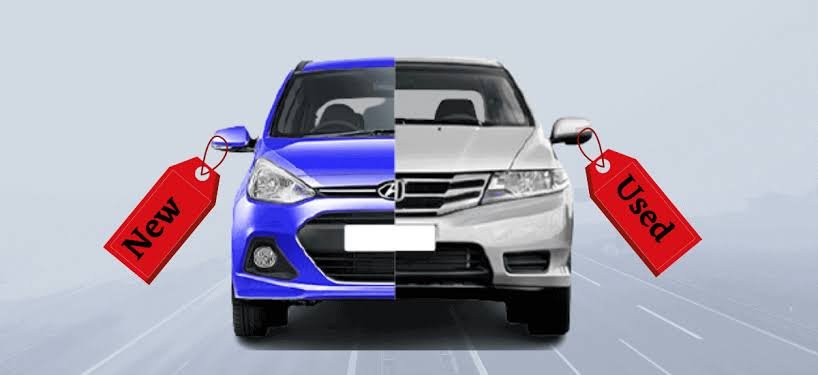
For most first-time buyers, the decision comes down to certainty versus value. A new car is usually the easier, lower-risk ownership experience. A carefully inspected used car can offer significantly more car for the same budget.
Why a New Car Is Easier for a First-Time Owner
First-time buyers are not only learning how to drive. They are also learning how to own a vehicle.
Suddenly there are:
- Service schedules
- Insurance renewals
- Tyre pressures
- Battery condition
- PUC requirements where applicable
- Warning lights
- Maintenance expenses
Starting with a brand-new vehicle removes many uncertainties.
You know its entire history because there is no previous owner.
There is no need to wonder whether the clutch has been abused, the odometer has been manipulated or the vehicle was involved in a serious accident.
For someone with little automotive knowledge, that peace of mind has real value.
Used Cars Offer Better Value for a Limited Budget
Suppose your total car budget is ₹7 lakh.
In the new-car market, that may restrict you to an entry-level hatchback or lower variant.
The same money in the used market could potentially buy a larger hatchback, sedan or compact SUV that originally cost substantially more.
That can give you access to:
- More powerful engine
- Better cabin space
- Larger boot
- Automatic transmission
- Higher variant
- Additional comfort features
But there is an important warning.
Do not buy an older premium or complicated vehicle simply because its used price now fits your budget.
A car’s purchase price depreciates; its spare parts do not necessarily depreciate with it.
A used ₹7 lakh car that originally cost ₹20 lakh can still generate maintenance bills associated with a much more expensive vehicle.
For a first-time owner, a mainstream model with easily available parts and a strong service network is generally safer.
A New Car Gives You Manufacturer Warranty
Warranty is one of the strongest reasons to buy new.
Coverage varies between manufacturers, but new vehicles generally include a standard manufacturer warranty from the beginning of ownership.
For example, Maruti Suzuki currently provides a standard warranty of 3 years or 1,00,000 km, whichever comes first, for applicable vehicles retailed from 9 July 2024 onward. The warranty covers qualifying defects in material or workmanship, subject to its terms and exclusions.
That can be reassuring for someone buying their first vehicle.
If a covered manufacturing defect appears during the warranty period, you have a clearly defined manufacturer support system.
Extended warranties may also be available.
A Used Car May Still Have Warranty Remaining
“Used” does not automatically mean “no warranty.”
A relatively new vehicle may still have part of its original manufacturer warranty remaining.
Whether that warranty transfers depends on the manufacturer’s terms.
Maruti Suzuki, for example, states that the remaining standard warranty is transferable to the next owner as long as the vehicle remains in India.
This makes a two- or three-year-old car potentially attractive.
You can benefit from a lower used-car purchase price while potentially retaining some manufacturer protection.
Before purchasing, confirm the warranty directly using the VIN/chassis number and authorised service records rather than relying only on what the seller says.
New Cars Lose Value Too
A new car begins depreciating once it enters service.
That matters if you expect to sell it after only a few years.
A used car has already absorbed part of its early depreciation, so the absolute amount you lose during your ownership can sometimes be lower.
This is one of the strongest financial arguments for buying used.
However, depreciation is highly model-specific.
Cars with:
- Strong demand
- Good reliability reputation
- Affordable parts
- Wide service networks
- Popular fuel-engine combinations
can retain value better than unpopular models.
Do not buy a used car solely because its price has fallen dramatically.
Heavy depreciation can sometimes indicate weak demand, expensive ownership or poor resale prospects.
A Few Scratches Hurt Less on a Used Car
This sounds trivial until you own your first car.
Beginners are more likely to make minor parking mistakes.
A small scratch on a brand-new car can feel painful.
The same scratch on a five-year-old vehicle that already has a few marks may be far less stressful.
This makes an inexpensive used hatchback particularly attractive as a learning car.
You can spend your first year developing confidence in:
- Parking
- Reversing
- Narrow streets
- Traffic judgement
- Vehicle dimensions
without treating every tiny cosmetic mark like a financial disaster.
That does not mean beginners should buy an unsafe old vehicle. The goal should be an affordable but mechanically sound and adequately safe used car.
New Cars Usually Offer More Current Safety Technology
This is where blindly choosing an older used car can become a mistake.
Indian vehicle safety requirements and manufacturer equipment levels have improved over time.
A newer model may offer equipment such as:
- Six airbags
- Electronic Stability Control
- Hill-start assist
- ISOFIX child-seat mounts
- Tyre-pressure monitoring
- Rear parking sensors
- 360-degree camera
- ADAS on applicable models
Not every new car has all these features, and a well-equipped used vehicle can still be safer than a basic new one.
The important lesson is:
Do not sacrifice essential safety simply to buy a larger used car.
Check the exact model year and variant because safety equipment can change significantly between versions of the same model.
Used-Car Condition Matters More Than Odometer Alone
Many first-time buyers focus excessively on kilometres driven.
They may immediately prefer a car showing 25,000 km over one showing 50,000 km.
That is not always sensible.
A properly serviced highway-driven vehicle with 50,000 km can be in better mechanical condition than a neglected 25,000 km city car.
Look at the entire history:
- Service records
- Number of owners
- Accident history
- Tyre condition
- Clutch condition
- Suspension
- Engine behaviour
- Transmission
- Interior wear
- Insurance history
- Warning lights
Mileage is one clue, not the complete answer.
Always Get a Used Car Independently Inspected
This is one of the most important rules for a first-time buyer.
Do not rely only on your own test drive.
You may not recognise:
- Repainted body panels
- Structural accident repairs
- Suspension noise
- Oil leaks
- Clutch wear
- Transmission problems
- Electrical faults
- Flood damage
- Abnormal engine noise
Have the vehicle inspected by an experienced independent mechanic or the manufacturer’s authorised workshop where possible.
Ideally, the inspection should include diagnostic scanning and underbody examination.
If a private seller refuses to allow a reasonable pre-purchase inspection, consider that a warning sign.
Check the Service History
A thick service history can be more valuable than a shiny exterior.
Ask for invoices or authorised-workshop records showing when the vehicle was serviced and what parts were replaced.
Check whether servicing roughly matches the manufacturer’s schedule.
Look for major upcoming expenses.
For example, a used car may appear ₹50,000 cheaper than another example but immediately require:
- Four tyres
- Battery
- Brake pads
- Suspension work
- Major scheduled service
The cheaper car can quickly become the expensive one.
For used cars, always keep some money outside the purchase budget for immediate maintenance.
Verify the RC and Ownership Details
Used-car paperwork is not something a first-time buyer should treat casually.
The Registration Certificate should correspond with the vehicle and seller.
Government transport services allow vehicle-related records to be checked through the VAHAN/mParivahan ecosystem, including information relating to registration, insurance validity, tax status, PUC and challan history where available.
Check that important details such as:
- Registration number
- Chassis number
- Engine details where applicable
- Fuel type
- Owner information
- Hypothecation status
are consistent.
Do not hand over the full payment and assume paperwork can be “sorted later.”
RC Transfer Is Essential
Buying the car does not mean ownership records automatically change to your name.
Parivahan explains that when a vehicle is sold, the purchaser must be recorded as the new registered owner through the transfer-of-ownership process. For a normal sale, Forms 29 and 30 are central to this procedure.
For a vehicle registered within the same state, Parivahan states that the transferee should apply for ownership transfer within 14 days; an interstate transfer involves additional requirements and a different timeframe.
Requirements can vary by state and circumstances.
The insurance policy also needs to be handled correctly.
Do not drive indefinitely with the RC and insurance arrangements remaining unresolved in the previous owner’s name.
Check Whether a Loan Is Still Recorded
If the previous owner financed the vehicle, inspect its hypothecation status.
After a loan has been fully repaid, the financier’s interest needs to be terminated in the registration record through the applicable process.
Parivahan identifies Form 35 and financier documentation as part of hypothecation termination.
This is particularly important in private-party transactions.
If the vehicle still has active finance, understand exactly how the outstanding loan will be cleared and how the necessary financier documents will be obtained before completing the purchase.
Used-Car Loans Can Change the Financial Calculation
A used car may have a lower sticker price, but financing deserves careful comparison.
Do not look only at the EMI.
Compare:
- Down payment
- Loan amount
- Interest rate
- Processing fees
- Loan tenure
- Total interest paid
- Foreclosure conditions
A slightly more expensive new car with attractive financing can sometimes produce a smaller total-cost difference than the showroom prices suggest.
Conversely, paying cash for a carefully chosen used car can be extremely economical.
Calculate the total amount payable, not just the monthly EMI.
New Cars Let You Choose Exactly What You Want
Buying new gives you control over specification.
You can choose:
- Colour
- Fuel type
- Manual or automatic
- Variant
- Features
- Accessories
Used-car buying works differently.
You choose from what is available.
You may find the perfect model but in the wrong colour. Or the right colour with the wrong gearbox. Or the perfect specification with questionable service history.
The best used-car buyers are patient.
Do not accept a poor example merely because you have already decided on a particular model.
Used Cars Can Be Excellent First Automatics
A beginner who wants an automatic but has a limited budget should seriously consider the used market.
Instead of buying the cheapest new automatic available, you may be able to find a well-maintained used vehicle with a smoother or more sophisticated automatic transmission.
But automatic transmissions require additional inspection.
During the test drive, check for:
- Delayed Drive or Reverse engagement
- Jerky shifts
- Unusual noises
- Warning lights
- Transmission overheating warnings
- Shuddering
- Poor low-speed behaviour
For CVT, DCT, torque-converter or AMT vehicles, investigate model-specific transmission history before purchasing.
An expensive gearbox repair can eliminate much of the saving from buying used.
Avoid Heavily Modified Used Cars
A first-time buyer is generally better off with a vehicle close to factory specification.
Be cautious about cars with:
- Engine remapping
- Extremely large aftermarket wheels
- Altered suspension
- Modified exhaust
- Non-standard electrical wiring
- Poorly installed lights
- Questionable CNG conversions
- Structural modifications
Modifications can complicate reliability, insurance and diagnosis.
A boring, completely standard car with documented servicing is usually a much better first purchase than a heavily modified car that looks exciting.
How Old Should a Used First Car Be?
There is no universal ideal age, but a relatively young used car often provides the best balance for beginners.
A car around 2–5 years old can potentially offer:
- Meaningful saving over new
- Modern safety equipment
- Reasonable remaining life
- Easier financing
- Better parts availability
- Possibly some remaining warranty
This is not a rule.
A meticulously maintained six-year-old car can be better than an abused two-year-old example.
Condition and history always come first.
When Is a New Car Better?
A new car is worth the additional money when you prioritise certainty.
Choose new when:
- You know little about inspecting vehicles.
- You want full manufacturer warranty.
- You intend to keep the car for many years.
- Current safety technology matters.
- You want a particular variant or specification.
- You do not want uncertainty about previous maintenance.
- Your budget comfortably supports the purchase.
For someone already nervous about first-time ownership, eliminating the risk of an unknown vehicle history can make the extra cost worthwhile.
When Is a Used Car Better?
Used makes sense when value is the priority.
Choose used when:
- Your budget is limited.
- You want a better segment within the same budget.
- You expect a few beginner scratches.
- You may upgrade after two or three years.
- You have access to a trustworthy inspection.
- You find a vehicle with complete service history.
- You can keep an emergency repair budget.
The key phrase is well-maintained used car.
A cheap used car with hidden problems is not a bargain.
New Car vs Used Car: Which Is Better for a First-Time Buyer?
For a first-time buyer who wants the lowest-risk and simplest ownership experience, a new car is usually better.
You receive a known history, manufacturer warranty, current technology and fewer uncertainties. You can concentrate on becoming a confident driver rather than wondering whether the previous owner neglected the vehicle.
For a first-time buyer focused on maximum value from a limited budget, a good used car can be the smarter purchase.
The strongest used-car option is often not the absolute cheapest vehicle available. It is a relatively young, mainstream model with complete service history, clean documentation, sensible mileage and a successful independent inspection.
If your budget allows either a basic new car or a 2–4-year-old higher-segment used car, compare them based on safety, condition, expected maintenance and total ownership cost—not simply size and features.
And if this is genuinely your first car, avoid stretching your finances merely to buy new. A dependable used car that leaves money available for insurance, servicing and emergencies can be a much healthier ownership decision.
FAQs
Q1. Is a used car good for a beginner?
Yes. A well-maintained used car can be an excellent first vehicle because it costs less and minor cosmetic damage may be less stressful. However, it should be professionally inspected and its ownership and service records verified before purchase.
Q2. How old should my first used car be?
A 2–5-year-old mainstream vehicle can offer a useful balance between depreciation and remaining life, but age alone should never decide the purchase. A slightly older car with complete service records can be preferable to a newer neglected vehicle.
Q3. Should I buy a new car if I plan to keep it for 10 years?
Buying new becomes easier to justify with a long ownership period because you receive the car’s entire usable life and know its complete history. Reliability, safety, service support and long-term parts availability should still influence the model you select.
Q4. What should I check before paying for a used car?
Verify the RC, insurance, service history, ownership details, hypothecation status and applicable PUC/challan information, and arrange an independent mechanical inspection. Parivahan’s ownership-transfer procedure also requires formal transfer into the purchaser’s name rather than simply exchanging payment and possession.