Drive only on a smooth expressway and a sedan can feel like the obvious choice. Its lower seating position, planted road manners and aerodynamic shape are well suited to fast, efficient cruising. Turn off that expressway onto a road with deep potholes, an oversized speed breaker, an unfinished section and a steep basement ramp, and the advantages of an SUV become much easier to understand.
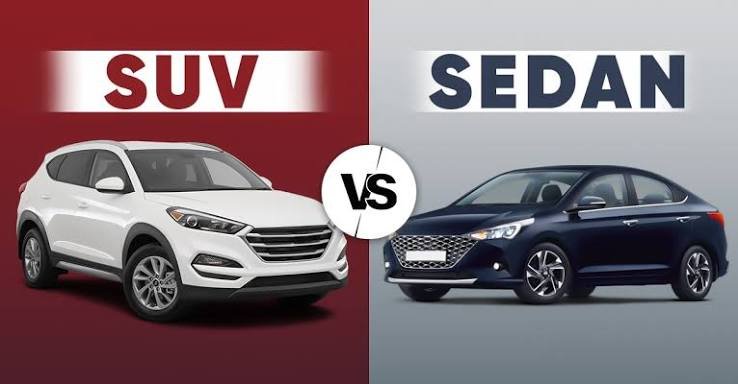
This is why the SUV vs sedan debate in India cannot be decided by body style alone. Indian driving conditions vary enormously, and the right choice depends on where you drive, how many people you carry, the condition of your local roads and whether comfort, efficiency or ground clearance matters most.
Why SUVs Have Become So Popular in India
Ground clearance is one of the strongest reasons.
Indian roads can include potholes, uneven surfaces, badly designed speed breakers and abrupt changes in road height. A higher-riding vehicle provides additional underbody clearance in these situations.
Autocar India notes that the demand for greater ground clearance has been one of the factors behind the shift from sedans and hatchbacks toward SUVs in India.
Many mainstream SUVs provide roughly 190–210 mm of clearance. For example, the Maruti Suzuki Grand Vitara is listed with 210 mm, while even the crossover-style Fronx provides 190 mm.
That additional clearance reduces the anxiety of approaching:
- Large speed breakers
- Deep potholes
- Broken village roads
- Steep parking ramps
- Uneven construction zones
- Poorly surfaced roads
This does not make every SUV an off-roader, but it can make everyday driving less stressful.
Sedans Are Not Necessarily Too Low for India
The traditional weakness of a sedan is lower ground clearance, but modern models have improved considerably.
The Volkswagen Virtus and Skoda Slavia, for example, provide 179 mm of ground clearance, substantially more than buyers might expect from a sedan. The Honda City has 165 mm, while the Maruti Suzuki Dzire provides 163 mm.
A sedan with 170–180 mm of clearance and a sensible wheelbase can handle most normal Indian roads without difficulty.
Problems become more likely when the car is heavily loaded or regularly encounters unusually large speed breakers, deep potholes and unpaved roads.
For predominantly urban and highway driving, therefore, rejecting every sedan because of ground clearance would be unnecessary.
SUVs Are Better on Rough and Broken Roads
If your daily route genuinely includes damaged roads, an SUV usually has the advantage.
Higher clearance provides more room between the road and vulnerable underbody components. Larger tyres with sensible sidewalls can also absorb imperfections effectively.
Some SUVs are specifically tuned to cope well with poor surfaces. For example, the Mahindra XUV 3XO has been praised for absorbing road imperfections effectively while remaining composed at highway speeds.
The new Renault Duster provides another good example. It combines 212 mm of ground clearance with suspension that has been rated highly for its ability to remain composed over varying surfaces.
However, SUV styling alone guarantees nothing. A stiffly suspended SUV with large wheels and low-profile tyres can ride worse over potholes than a well-tuned sedan.
Sedans Usually Feel Better on Smooth Highways
Move onto a good highway and the balance starts shifting.
A sedan’s lower centre of gravity generally helps reduce body movement through corners and during quick direction changes. Its lower aerodynamic profile can also help efficiency and high-speed refinement.
The seating position contributes to the experience as well. You sit closer to the road rather than high above it, which many enthusiastic drivers prefer.
Cars such as the Volkswagen Virtus, Skoda Slavia and Hyundai Verna demonstrate why sedans remain excellent highway vehicles.
If most of your driving consists of well-surfaced highways, an SUV’s extra ground clearance may provide little practical benefit. Even when discussing premium SUVs, Autocar notes that extra ground clearance is not necessarily the main reason to choose one when most driving occurs on good roads.
Which Is More Comfortable?
This is where simple SUV-versus-sedan assumptions become unreliable.
An SUV does not automatically have softer suspension, and a sedan is not automatically uncomfortable.
Ride comfort depends on:
- Suspension tuning
- Wheel size
- Tyre sidewall
- Wheelbase
- Vehicle weight
- Seat design
- Suspension travel
- Passenger load
Some SUVs use relatively firm suspension to control their taller and heavier bodies.
The Hyundai Exter, for example, can become firm and unsettled over repeated broken surfaces when fully loaded despite its SUV-inspired body style.
The correct approach is therefore to test-drive the exact variant on an imperfect road rather than judging comfort from appearance.
SUVs Offer Easier Entry and Exit
This can be a significant advantage for families.
SUV seats are generally positioned higher than sedan seats. Passengers do not have to lower themselves as far when entering the vehicle or climb upward as much when getting out.
For elderly parents or passengers with limited mobility, the difference can be important.
A higher seating position also gives the driver a more commanding view of surrounding traffic. This is one reason SUVs such as the Creta are frequently recommended to buyers prioritising easy ingress and egress.
Extremely tall SUVs can present the opposite problem, however. If the floor is too high, elderly passengers may find climbing into the vehicle difficult.
Sedans Can Offer Surprisingly Large Boots
Do not assume an SUV automatically carries more luggage.
The Volkswagen Virtus and Skoda Slavia provide around 521 litres of boot capacity, while several midsize sedans offer more than 500 litres.
A conventional sedan boot works particularly well for suitcases because the luggage compartment is deep and separated from the passenger area.
SUVs have another advantage: flexibility.
Their large tailgate openings make it easier to load tall objects, and folding the rear seats can create substantially more cargo room. An SUV is therefore often better for bicycles, large boxes or irregularly shaped luggage.
For conventional suitcases, however, a sedan can be equally practical or even better.
Which Gives Better Mileage?
Sedans generally have an inherent advantage because they tend to be lighter and more aerodynamic than similarly powered SUVs.
At highway speeds, aerodynamic drag becomes increasingly important. A lower body with a smaller frontal area usually requires less energy to move through the air.
This does not mean every sedan beats every SUV. Engine technology, hybridisation, transmission and vehicle weight can completely change the result.
A strong-hybrid SUV, for example, may easily outperform a powerful turbo-petrol sedan in urban fuel economy.
Compare the specific engines and variants, not merely the body styles.
SUV vs Sedan for City Driving
For crowded Indian cities, both have advantages.
An SUV makes sense when:
- Roads have frequent potholes or large speed breakers.
- You prefer a higher driving position.
- Elderly passengers need easier entry.
- Your parking area has steep ramps.
- You regularly encounter poor road surfaces.
A sedan makes sense when:
- Roads are predominantly paved.
- Fuel economy matters strongly.
- You enjoy driving.
- Highway stability is important.
- You want a large conventional boot.
- You prefer a lower purchase price than an equivalent larger SUV.
Compact SUVs provide a useful compromise. Vehicles such as the Brezza, Nexon, XUV 3XO and Kylaq provide useful ground clearance without becoming excessively large for city streets.
What About Waterlogged Roads?
SUV buyers often cite waterlogging as another reason for choosing greater ground clearance.
Additional height can help keep certain components farther away from shallow standing water, but ground clearance should never be confused with safe water-wading capability.
Water depth can be difficult to judge. Driving into sufficiently deep water can damage an engine, electronics, transmission components or an EV’s systems despite the vehicle looking like a rugged SUV.
A tall SUV is not permission to drive through a flooded road.
If the depth or road underneath cannot be assessed safely, finding another route is the better decision.
Is an SUV Safer Than a Sedan?
Not simply because it is bigger or taller.
Safety should be evaluated using the specific model’s crash-test performance and equipment, rather than its body style.
Look for:
- Strong independent crash-test results
- Electronic Stability Control
- Adequate airbags
- Three-point seat belts
- ISOFIX child-seat mounts
- Good braking performance
- Tyre Pressure Monitoring System
- ADAS where useful
An SUV’s higher centre of gravity can also make controlling body movement more challenging, which is why ESC is particularly valuable.
A well-engineered five-star-rated sedan can be a much more sensible safety choice than an SUV selected purely because it looks larger.
Which Is Easier to Park?
Sedans are lower, but they are not necessarily shorter.
Midsize sedans such as the City, Verna, Virtus and Slavia are longer than many sub-four-metre SUVs. That can make a compact SUV easier to fit into a short parking bay.
On the other hand, SUVs can be wider and their taller bonnets may make objects immediately in front of the vehicle harder to judge.
Parking sensors, reversing cameras and 360-degree camera systems can therefore make a meaningful difference.
If parking space is limited, compare the actual length, width and turning circle rather than simply choosing between “SUV” and “sedan.”
SUV vs Sedan: Which Should You Buy?
For typical Indian road conditions, an SUV or crossover is the more versatile choice when the buyer regularly encounters broken roads, large speed breakers, steep ramps or poor surfaces. Higher ground clearance and easier entry also make SUVs particularly family-friendly.
But if your driving happens mainly on good city roads and highways, a sedan remains an excellent choice. It can provide better driving dynamics, potentially stronger fuel efficiency, excellent luggage capacity and a more planted highway experience.
The best answer therefore depends on your usage:
Choose an SUV if: road quality and ground clearance are major concerns, you value a high seating position, or you regularly travel beyond well-maintained urban roads.
Choose a sedan if: most roads you use are good, highway driving is frequent, efficiency matters and you prefer a lower, more car-like driving experience.
For buyers who want both characteristics, newer sedans such as the Virtus and Slavia provide an interesting middle ground. Their 179 mm ground clearance addresses one of the traditional disadvantages of a sedan without requiring buyers to move into an SUV.
FAQs
Q1. Is an SUV always better for Indian roads?
A. No. An SUV has a clear advantage when roads are badly broken or speed breakers are unusually large, but a modern sedan is perfectly suitable for most normal paved roads. Your regular route matters more than the popularity of a particular body style.
Q2. How much ground clearance is good for Indian roads?
A. There is no universal minimum. Around 160–180 mm can work well for normal paved roads, while roughly 190–210 mm provides additional confidence on rough surfaces. Wheelbase, suspension and passenger load also affect whether a vehicle scrapes.
Q3. Which is better for long highway trips: SUV or sedan?
A. On smooth highways, a good sedan can be excellent because of its lower stance, stability and aerodynamic efficiency. An SUV becomes more useful when the journey also includes broken roads, difficult terrain or passengers who prefer easier entry and a higher seating position.
Q4. Should a family buy an SUV instead of a sedan?
A. Not automatically. Families with elderly passengers or poor local roads may appreciate an SUV’s higher seating and ground clearance. Families primarily driving on good roads may find a spacious sedan equally comfortable while gaining a large boot, good highway manners and potentially better fuel economy.