The TVS Motor Company business model earns money by designing, building and selling motorcycles, scooters, mopeds, three-wheelers and electric vehicles through a dealer network in India and in export markets, with a financing arm adding interest income. In FY26 it sold 58.9 lakh vehicles and reported revenue of ₹47,270 crore, with an operating EBITDA margin of 12.9%. A few figures conflict across sources, which I’ve flagged.
Quick Facts
| Metric | FY25 | FY26 |
|---|---|---|
| Vehicles sold | 47.4 lakh | 58.9 lakh, up 24% |
| Revenue from operations | ₹36,251 crore | ₹47,270 crore, up 30% |
| Operating EBITDA | ₹4,450 crore | ₹6,079 crore, up 37% |
| Operating EBITDA margin | 12.3% | 12.9% |
| EV sales | About 2.8 lakh | 3.71 lakh, up 33% |
| Exports | About 10.9 lakh | 14.26 lakh, up 30.9% |
The Short Answer
TVS makes money on volume, mix and a growing set of businesses around the vehicle.
- It sells two-wheelers, three-wheelers and EVs to dealers and distributors, who sell on to customers
- Exports contribute nearly a quarter of revenue, according to a Reuters snippet cited by Multibagg
- Its financing arm, TVS Credit Services, supports vehicle sales and earns interest
- Revenue per vehicle is rising as the mix moves towards scooters, premium models and EVs
What TVS Sells?
The product range is wider than motorcycles.
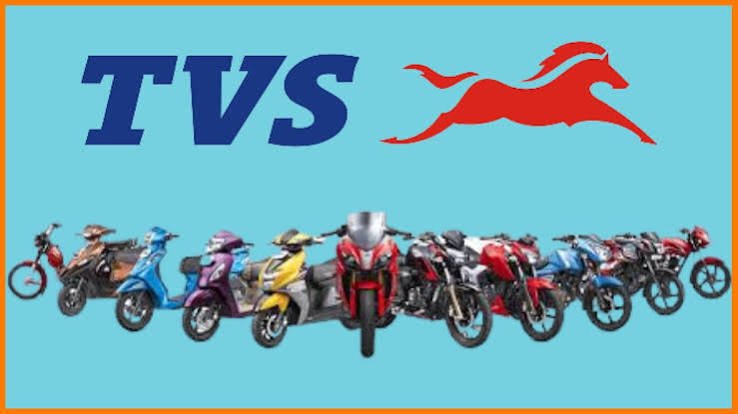
- Motorcycles, scooters and mopeds make up the bulk of the volume
- Q1 FY27 scooter sales were 6.8 lakh units, up 36%, according to one analysis
- Three-wheelers sold 2.19 lakh units in FY26, up 63%, and 67,000 in Q1 FY27, with EV penetration in three-wheelers crossing 40% for the first time
- Electric vehicles include the iQube, which crossed 8 lakh cumulative domestic wholesales by December 2025, and the more premium TVS X, priced near ₹2.66 lakh
The Revenue Math
Volume and price both moved.
- Revenue grew 30% on volume growth of 24%, so average revenue per unit rose too
- By my arithmetic, revenue per vehicle was about ₹80,000 in FY26 against about ₹76,500 in FY25, roughly 5% higher, though the figure includes parts, accessories and other operating revenue, so it’s not a vehicle price
- EBITDA margin of 12.9% means about ₹12.90 of operating profit for every ₹100 of revenue
- Profit after tax is reported at ₹3,615 crore against ₹2,634 crore the year before, about 7.6% of revenue, though another summary quotes ₹3,524 crore and mislabels a quarterly revenue figure of ₹15,053 crore as annual, so check the filing
Domestic and Export Markets
Two engines run in parallel.
- TVS exported 14,26,424 units in FY26, up 30.9%, according to Electro IQ
- Exports were 4.7 lakh units in Q1 FY27, up 33%, according to one analysis
- June 2026 international business grew 47% to 1,72,355 units, according to ScanX
- Exports diversify earnings away from the domestic cycle and typically carry currency exposure
Electric Vehicles
EVs are the fastest-growing line.
- FY26 EV sales were 3.71 lakh units, up 33%, and EV sales rose 51% in Q4 to 1.15 lakh units
- Q1 FY27 two-wheeler EV volumes were about 1.3 lakh units, up 86% year on year, according to Bramesh’s analysis, though one table mislabels the comparison base as Q4 FY26
- TVS has more than 9 lakh EV customers, and Q1 FY26 EV revenue was around ₹1,780 crore, according to ScanX
- Heavy promotion spend is a risk to margins, but Q1 FY27 margin still rose to 12.8%
TVS Credit and Subsidiaries
The group earns beyond the factory.
- TVS Credit Services reported sustained growth in disbursements in Q1 FY27, according to ScanX
- A finance arm lowers the barrier to purchase and earns an interest margin, though the sources I found don’t give its profit
- A partnership with Hyundai Motor Company for electric three-wheelers is mentioned in coverage of the FY26 results
- I couldn’t verify other subsidiary contributions from these sources
Capacity and Investment
TVS is spending to meet demand.
- It has invested ₹3,500 crore to expand two-wheeler capacity from 6.8 million to 8.3 million units, and three-wheeler capacity from 0.25 million to 0.42 million units, according to ScanX
- Higher capacity supports growth but adds fixed costs, which needs utilisation to stay high
The Latest Quarter
Momentum continued into FY27.
- Q1 FY27 revenue rose 38% to ₹13,896 crore, and PAT rose 51% to ₹1,174 crore, according to ScanX
- Sales volume was 1.63 million units, up 28% from 1.28 million
- Operating EBITDA margin improved by 30 basis points to 12.8%, despite commodity inflation
- Another analysis puts the consolidated PAT growth at 64.5%, which differs from the standalone 51%
Where the Sources Disagree?
A few points need care.
- PAT: ₹3,615 crore in one summary and ₹3,524 crore in another
- The Multibagg article’s ₹15,053 crore revenue is a quarterly figure labelled annual, so ignore it
- Standalone and consolidated profit growth differ in Q1 FY27
- For primary figures, check the company’s results release on the stock exchanges
Risks
The model has pressure points.
- Raw material costs, particularly in a commodity upcycle
- EV competition and promotional spending
- Export markets exposed to currency swings
- Dependence on a robust two-wheeler cycle in India and abroad
FAQs
Q1. How does TVS Motor make money?
A. By selling two-wheelers, three-wheelers and EVs through dealers in India and abroad, plus interest earned by its financing arm, TVS Credit.
Q2. What was TVS Motor’s FY26 revenue?
A. TVS Motor Company Business Model: How Does TVS Motor Company Make Money?₹47,270 crore, up 30%, with 58.9 lakh vehicles sold and an operating EBITDA margin of 12.9%.
Q3. How much does TVS export?
A. 14,26,424 units in FY26, up 30.9%, with exports contributing nearly a quarter of revenue, according to the sources above.
Q4. How many EVs does TVS sell?
A. 3.71 lakh in FY26, up 33%, with Q4 sales up 51% and the iQube crossing 8 lakh cumulative wholesales by December 2025.