For a car used every day, the features that impress during a showroom visit are not always the ones that matter after six months. A daily-use car has to deal with office traffic, grocery runs, tight parking, fuel bills, occasional family trips and thousands of kilometres of routine driving.
That makes the choice between a sedan and a hatchback more practical than emotional. A sedan gives you a separate, usually larger boot, a longer body and often a more relaxed highway experience. A hatchback concentrates passenger and luggage space into a smaller footprint, making it easier to manoeuvre through congested Indian cities.
Neither body style is universally better. The right one depends on what your normal week looks like.
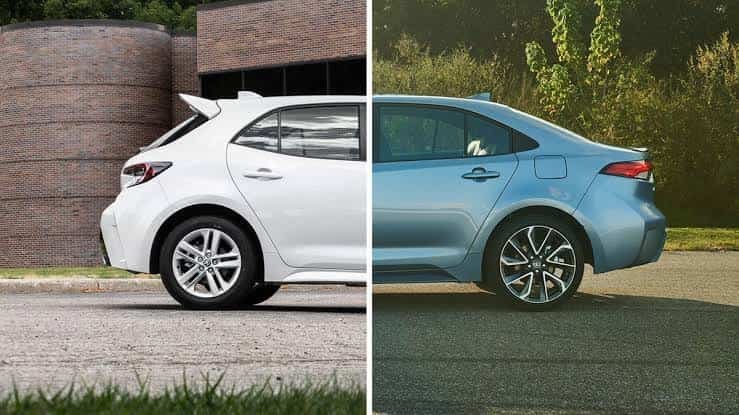
Hatchbacks Are Easier to Use in Congested Cities
For dense urban driving, compact dimensions are difficult to beat.
The Hyundai Grand i10 NIOS, for example, is only 3,815 mm long and 1,680 mm wide, with a 2,450 mm wheelbase.
A short car is useful when you regularly have to:
- Navigate narrow residential streets
- Make U-turns in limited space
- Park beside other vehicles
- Drive through crowded markets
- Fit into small apartment parking bays
- Change lanes in slow-moving traffic
The advantage becomes noticeable every day rather than only during an occasional trip.
If your normal journey is home → office → market → home, a hatchback can be the less stressful choice.
Sedans Give You More Luggage Space
A sedan separates its luggage compartment from the passenger cabin.
That conventional three-box design can provide surprisingly large boot capacity. The current Honda City, for example, offers 506 litres of boot space.
This is useful for families carrying:
- Large suitcases
- Office luggage
- Shopping bags
- Baby equipment
- Airport luggage
- Weekend-trip baggage
There is also a privacy advantage. Luggage sits inside a completely separate compartment rather than directly behind the rear seats.
Hatchbacks compensate with flexibility. Their rear seats can usually be folded to accommodate tall or unusually shaped objects, while the large tailgate opening makes loading bulky items easier.
So the sedan generally wins for normal suitcase capacity, while the hatchback can be better for irregularly shaped cargo.
Which Is Better for Parking?
A hatchback normally wins again.
Consider the difference between two typical cars. The Grand i10 NIOS measures 3,815 mm long, while the Honda City is approximately 4,574–4,583 mm long depending on variant.
That is a substantial difference when parallel parking.
The City’s turning-circle radius is 5.3 metres, which is manageable, but the longer rear section still requires more attention when reversing or entering a short parking bay.
Parking technology can reduce the inconvenience. A reversing camera, sensors or 360-degree camera can make a sedan considerably easier to manage.
But technology cannot reduce the vehicle’s physical length.
If your home or office has extremely limited parking, measure the space before deciding.
Sedans Can Feel More Relaxed on Highways
The sedan starts making a stronger argument once your daily routine extends beyond congested streets.
A longer wheelbase and lower body can contribute to a stable, planted highway experience, although suspension design and engineering matter more than body style alone.
Sedans such as the Honda City, Hyundai Verna, Volkswagen Virtus and Skoda Slavia are particularly attractive to people who combine weekday commuting with frequent intercity travel.
Their lower seating position can also feel more natural to drivers who prefer a conventional car-like driving experience.
If your daily commute includes 30–40 km of expressway rather than only narrow urban streets, the sedan’s advantages become more meaningful.
Which Is More Fuel-Efficient?
A hatchback often has an advantage because it is generally smaller and lighter than a comparable sedan.
But body style alone does not determine mileage.
Fuel consumption depends heavily on:
- Engine
- Vehicle weight
- Transmission
- Traffic
- Driving style
- Tyres
- Air-conditioning use
- Hybrid technology
Even among sedans, efficiency can be strong. Honda officially rates the current City petrol at 17.77 km/l with the manual and 18.40 km/l with the CVT under certified test conditions.
For daily use, compare the exact variants you intend to purchase rather than assuming every hatchback will automatically consume less fuel.
If you drive very high monthly kilometres, factory CNG options available on some hatchbacks and compact sedans may also deserve consideration.
Hatchbacks Usually Cost Less to Buy
Budget remains one of the strongest arguments for a hatchback.
The current Hyundai Grand i10 NIOS, for example, starts at approximately ₹5.60 lakh ex-showroom, making it accessible to first-time buyers and urban commuters.
A midsize sedan can cost considerably more.
However, this comparison needs to be fair. A premium hatchback and compact sedan can sometimes overlap substantially in price.
When comparing two vehicles, look beyond the initial showroom figure and consider:
On-road price + fuel + insurance + maintenance + depreciation
A ₹1 lakh saving at purchase time becomes less important if the more expensive car better fits your needs for the next eight years.
Which Is More Comfortable for a Family?
A sedan does not automatically have more passenger space simply because it is longer.
Much of its extra length may be behind the rear wheels in the boot.
What matters inside the cabin is:
- Wheelbase
- Seat design
- Rear legroom
- Headroom
- Seat width
- Floor height
- Suspension
- Door opening
The Grand i10 NIOS demonstrates how efficiently a hatchback can package its cabin, fitting a 2,450 mm wheelbase into a 3,815 mm body. Hyundai also specifically highlights its spacious interior.
The Honda City takes passenger space further with a 2,600 mm wheelbase and a larger overall footprint.
For a couple or small family, a good hatchback can provide enough room.
If three adults regularly sit in the rear or your children are approaching adulthood, the additional space available in a larger sedan may be worthwhile.
Hatchbacks Are Excellent First Cars
Someone buying their first car has to learn much more than simply operating the steering wheel and pedals.
There is parking judgement, understanding the car’s width, reversing, navigating tight streets and estimating the space available during U-turns.
A compact hatchback makes many of these tasks easier.
That is why cars such as the Swift and Grand i10 NIOS remain logical choices for:
- First-time owners
- New drivers
- Students
- Young professionals
- Couples
- Small families
- Second-car buyers
An automatic hatchback can make the experience even easier in heavy traffic by removing constant clutch operation.
Sedan vs Hatchback on Bad Roads
Neither body style is designed primarily for serious rough-road use, but ground clearance differs considerably between individual models.
Some modern sedans have been engineered specifically with Indian conditions in mind, while certain hatchbacks can still scrape when heavily loaded over an unusually large speed breaker.
When bad roads are common, check:
- Ground clearance
- Wheelbase
- Suspension travel
- Tyre sidewall
- Front overhang
- Full-load behaviour
Do not assume a hatchback will automatically handle poor roads better simply because it is shorter.
If broken roads and large speed breakers dominate your daily route, a crossover or compact SUV may actually suit you better than either option.
Which Is Safer: Sedan or Hatchback?
Body style alone cannot answer this question.
A longer bonnet or separate boot does not automatically make a sedan safer, just as a smaller hatchback should not automatically be considered unsafe.
Evaluate the actual vehicle’s crash performance and safety equipment.
Look for:
- Independent crash-test results
- Six airbags where available
- Electronic Stability Control
- ABS with EBD
- Three-point seat belts
- ISOFIX child-seat mounts
- Tyre Pressure Monitoring System
- Strong braking performance
- ADAS where available
The exact variant matters too. Safety equipment can differ across the same model’s range.
For family use, structural crash protection and fundamental safety equipment should receive priority over features such as a sunroof, ambient lighting or a larger touchscreen.
Sedan vs Hatchback for Daily Office Commutes
For a 10–20 km commute through heavy city traffic, a hatchback is difficult to beat.
Its smaller footprint simplifies parking and manoeuvring, while a fuel-efficient engine or automatic transmission can make daily traffic easier to tolerate.
For a 30–60 km commute involving highways or expressways, a sedan becomes more appealing.
Its more substantial cabin, large boot and highway-oriented character can make longer journeys more comfortable.
This distinction is more useful than simply asking which body style is better.
Think about where the kilometres are actually being driven.
What About Resale Value?
Resale depends much more on the individual model than whether it is a hatchback or sedan.
Popular hatchbacks can have excellent used-market demand because they appeal to first-time buyers and people seeking economical transportation.
Likewise, established sedans can maintain healthy demand when they have a reputation for reliability and affordable ownership.
Factors affecting resale include:
- Brand reputation
- Model popularity
- Fuel type
- Transmission
- Service history
- Mileage
- Accident history
- Mechanical condition
- Local used-car demand
Choose a model with an established ownership ecosystem rather than assuming one body style guarantees better resale.
Sedan vs Hatchback: Which Should You Buy?
For most people who drive almost entirely inside a crowded city, the hatchback is the more practical daily-use car. It is easier to park, easier to manoeuvre and generally less expensive to purchase. Its cabin and boot can be perfectly adequate for a small family.
A sedan becomes the stronger option when daily use includes longer distances, highways, regular family travel or significant luggage. Its larger boot and more substantial road-going character can justify the additional length and price.
A simple way to decide is:
Choose a hatchback if parking is difficult, traffic is heavy, your family is small and affordability and easy manoeuvrability matter most.
Choose a sedan if you frequently drive longer distances, regularly carry luggage, need greater passenger space or prefer a more planted highway experience.
The key is not to buy for the two longest journeys you take each year. Buy for the conditions the car will face on the other 300 days.
FAQs
Q1. Is a hatchback better than a sedan for city driving?
A. Usually, yes. Its shorter body makes a hatchback easier to park and manoeuvre through congested streets. For predominantly urban commuting, this can be more useful than the larger boot offered by a sedan.
Q2. Which is better for a family: sedan or hatchback?
A. A hatchback can work perfectly well for a couple or small family. A sedan becomes more useful when you regularly carry several passengers and significant luggage, particularly on longer journeys.
Q3. Is a sedan difficult to drive in city traffic?
A. Not necessarily. Modern sedans have light steering, automatic transmissions, reversing cameras and parking sensors. Their additional length mainly becomes noticeable in tight parking spaces, U-turns and narrow streets.
Q4. Should a first-time buyer choose a hatchback or sedan?
A. A hatchback is generally easier for a first-time owner because its compact dimensions simplify parking and judging the vehicle’s boundaries. However, a confident new driver who regularly travels with family or on highways may prefer the additional space and luggage capacity of a sedan.